
What we learned about bats in our mountain home — and how we handled it
There’s a certain excitement that comes with arriving at your mountain home.
This was only our second visit after purchasing, and things were already looking up. The inspection process had revealed we needed a new roof — something we negotiated with the seller — and by the time we arrived, Justin Dudley and his team at 365 Roofing had nearly finished the job. From the outside, everything looked beautiful. Clean lines, a gorgeous finish, and an exceptionally tidy cleanup after what is typically a very messy tear-off.
We walked in feeling excited.
And then we looked around.
Not Exactly the Welcome We Expected
Our great room — our beautiful great room — was covered in tiny little specks.
At first glance, it looked like mouse droppings.
Ewwww.
Not exactly how you imagine arriving at your mountain home. After texting several pest control companies and, yes, sending photos, we learned our first unexpected lesson of mountain home ownership.
Bat droppings and mouse droppings look nearly identical. The way you tell the difference — and I say this as someone who never imagined performing this particular test — is by pressing them. If it crumbles, it’s bat guano. If it stays hard, it’s likely from mice.
There we were.

Not All Pest Control Companies Handle Bats
The second surprise was that many pest control companies don’t deal with bats at all. Fortunately, we came upon Payden Bell, owner of Rocky Mountain Bird & Pest Solutions— and finding him turned out to be one of the better things to come out of an otherwise memorable afternoon.
Payden knows more about bats than seems humanly possible. He understands how they think, how they move, how they live — and you get the sense that he genuinely likes them, which probably helps. What he did for us that day wasn’t just identify the problem. He took the time to explain it in a way that helped us understand what we were actually dealing with — rather than just react to it.
It’s worth mentioning that this work comes with real personal risk. Payden has been bitten multiple times over the course of his career and has had to undergo rabies shots — which are serious, painful, and expensive. The fact that he continues to handle these situations with such care and respect for the animals says everything about the kind of person he is.

Mountain Homes Come With Mountain Realities
What Payden explained to us was both fascinating and, admittedly, a little unsettling.
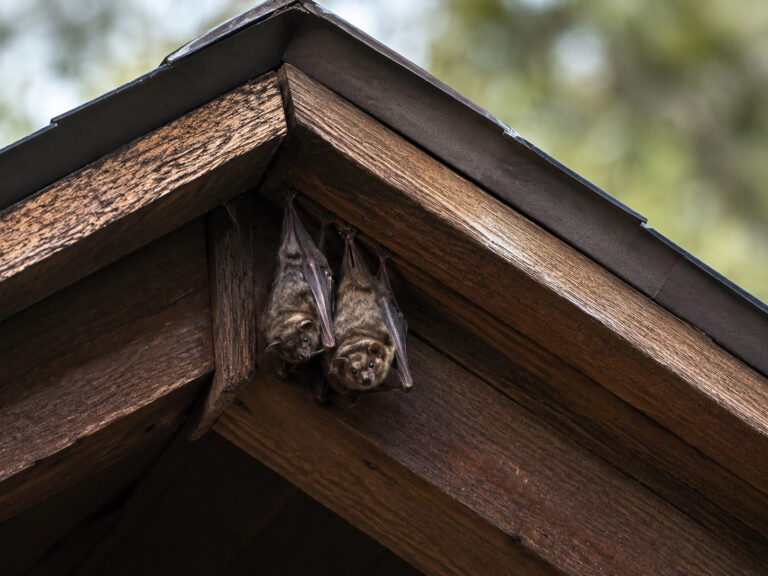
Bats can squeeze through openings as small as 3/8th of an inch – often at high peaks not easily visible to homeowners. They commonly live in the space between a roof’s exterior and the interior wood — in our case, the tongue-and-groove ceiling of our great room. The work being done on our roof had likely disturbed them, and that disturbance had caused the guano to fall into our living space.
It’s as unpleasant as it sounds. But it’s also not uncommon — particularly in mountain homes, and especially in log homes throughout the Durango area. If you own a property here, this is simply one of the realities worth knowing about.
Timing Matters More Than You’d Think
One of the most important things we learned is that bats are federally protected, making it illegal to harm them — and during maternity season, which typically runs from May through August, they cannot be removed at all.
That means the right solution requires patience. Bat removal in Colorado is a humane process that involves waiting until late summer or early fall, sealing all entry points, and installing one-way netting that allows bats to exit but not return. It takes time — but it’s the only way to do it correctly, and Payden wouldn’t have it any other way.
Not All Solutions Are Actually Solutions
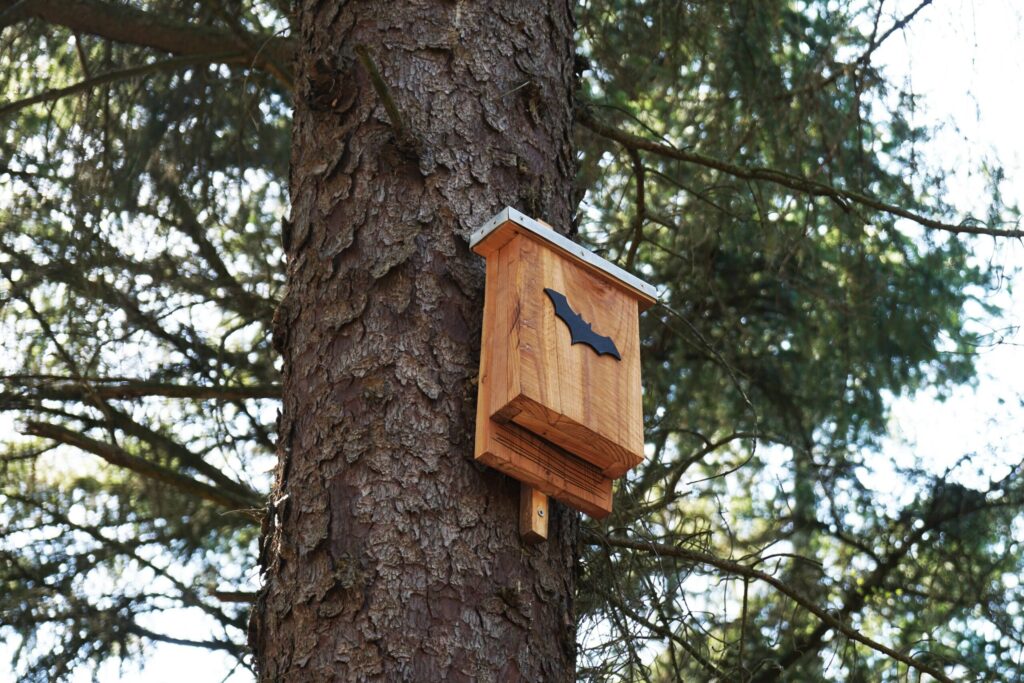
We also discovered that the previous homeowners had installed bat houses directly on the home — well-intentioned, but not ideal. With Payden’s guidance, we relocated them to tall trees away from the structure, where they could still serve their purpose without drawing bats back toward the house.
It was a small detail, but it made a meaningful difference.
The Outcome
It didn’t happen overnight. It took proper timing, patience, and a couple of follow-up visits.
But today, we’re happy to report — we are bat free.
We’ve since worked with Payden again to address a woodpecker situation as well, which is a story for another day. Having someone knowledgeable, responsive, and genuinely thoughtful — especially for situations like this — makes more of a difference than we ever expected when we bought this property.
If you find yourself dealing with a bat situation in Southwest Colorado, we can’t recommend Rocky Mountain Bird & Pest highly enough. Payden Bell is the real thing.
A Final Thought
Choosing to live in the mountains means accepting that you’re a guest in someone else’s world — one that was here long before you, and will be long after. And if we’re being honest, the bats, the woodpeckers, and everything else out there has a stronger claim to this place than we do.
Respecting that helps soften the initial “ick” factor. But more practically, knowing who to trust to handle it — carefully, humanely, and correctly — brings a peace of mind that’s genuinely hard to put a price on.
For us, that made all the difference.
This is part of our Life Lessons of a Durango Homeowner series — real experiences from owning a home in Southwest Colorado.
→ [Life Lessons of a Durango Homeowner: Fire Mitigation Edition] → [Life Lessons of a Durango Homeowner: Woodpecker Edition] → [Life Lessons of a Durango Homeowner: Rodent Edition]