
A guide to custom holiday design — and what it really means to have a home that feels like yours
When homeowners ask whether a holiday decorator can match their home’s style, they’re rarely asking about technical skill.
What they’re really asking is: will it still feel like my home when it’s done?
That’s a fair question. You’ve spent years creating a home that reflects who you are. Now you’re considering inviting someone in to layer something significant on top of all of it. The concern isn’t whether the decorator is talented. It’s whether they truly understand you and your style.
For vacation homeowners, there’s often another layer. These homes hold a particular emotional identity — a slower pace, a sense of intention, a version of life that feels earned. The worry isn’t just aesthetic. It’s that the wrong design could disrupt the feeling you come here for.
The short answer is yes — a good holiday designer can absolutely match your home’s style. But the longer answer is more interesting than that.
Beautiful doesn’t always mean right
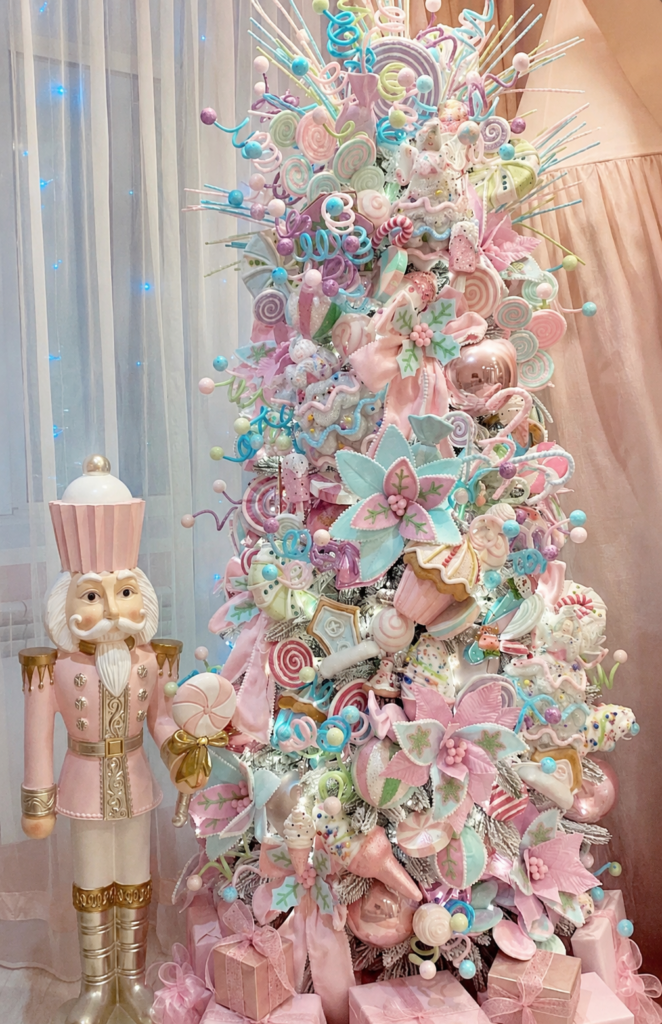
Not long ago, I came across a stunningly decorated Christmas tree inspired by a whimsical Candyland theme. Pastel colors, oversized sweets, playful details. Real creative imagination behind every inch of it. I loved it.
But I also knew it would never belong in my mountain home.
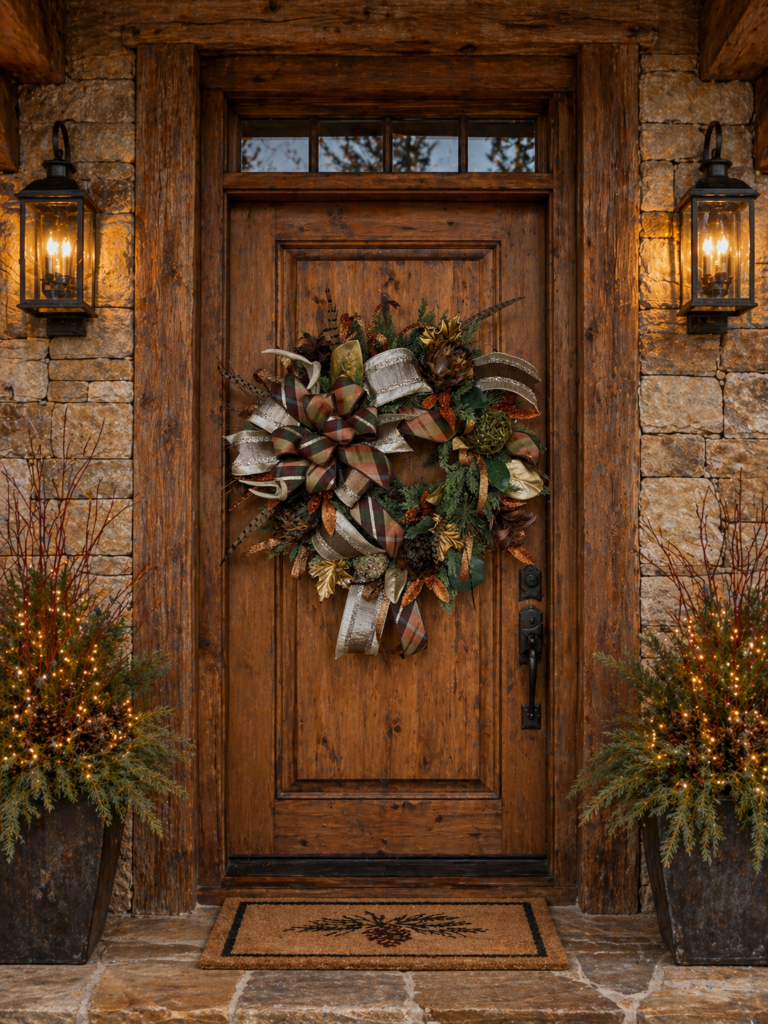
Our home is built around knotty alder, reclaimed beams, stone, and leather. A soft pastel design would look totally out of place — pretty in isolation, but disconnected from everything around it. The question is never whether a design is beautiful. It’s whether it belongs.
And it’s just as true within a single setting. Even here in the mountains, homes differ greatly. What feels right in a sleek mountain modern home — clean lines, muted palette, understated elegance — may feel completely out of place in a warm, traditional log home full of rich wood and stone. Same landscape. Very different design languages.
Great holiday design doesn’t start with a style. It starts with the home.
How I read a home
When I walk into a space for the first time, I’m not immediately thinking about ribbon colors or ornament styles. I’m paying attention.
The architecture speaks first. How high are the ceilings? Where are the natural focal points — a fireplace, a staircase, a wall of windows? What materials define the space? Wood, stone, tile, wall color — these aren’t just finishes. They’re a design language the home is already speaking, and the holiday design needs to speak it fluently.
Then I look at how people live in the space — whether they layer collected objects and family photos throughout, or keep things spare where every accent earns its place. The pillows on a sofa, a throw over a chair, candles on a console.
These are the choices people make without overthinking them, which makes them surprisingly honest.
And then I spend time getting to know the homeowner. I ask questions, look at images together, and whenever possible, photographs of past holiday decorating. A picture of what someone has already loved — or what fell flat — starts the conversation in the most honest place possible.
The why behind the what
There are times when a homeowner’s taste is very different from my own. And that’s completely fine.
What matters more than my preferences is understanding what’s behind theirs.
If someone loves Santas throughout their home, I don’t want to quietly steer them somewhere else. I want to understand why. It may be that a relative dressed as Santa every Christmas when they were a child. It may be that their grandchildren are in those wonder years and they want every corner of the house to feel like magic. The “why” isn’t just background — it’s often the foundation of the entire design.
Because isn’t that really what matters? Creating feelings and experiences that make the season — and the people you share it with — feel genuinely special.
When the inspiration is something you already love
One of my favorite examples came from a longtime client named Sylvia.
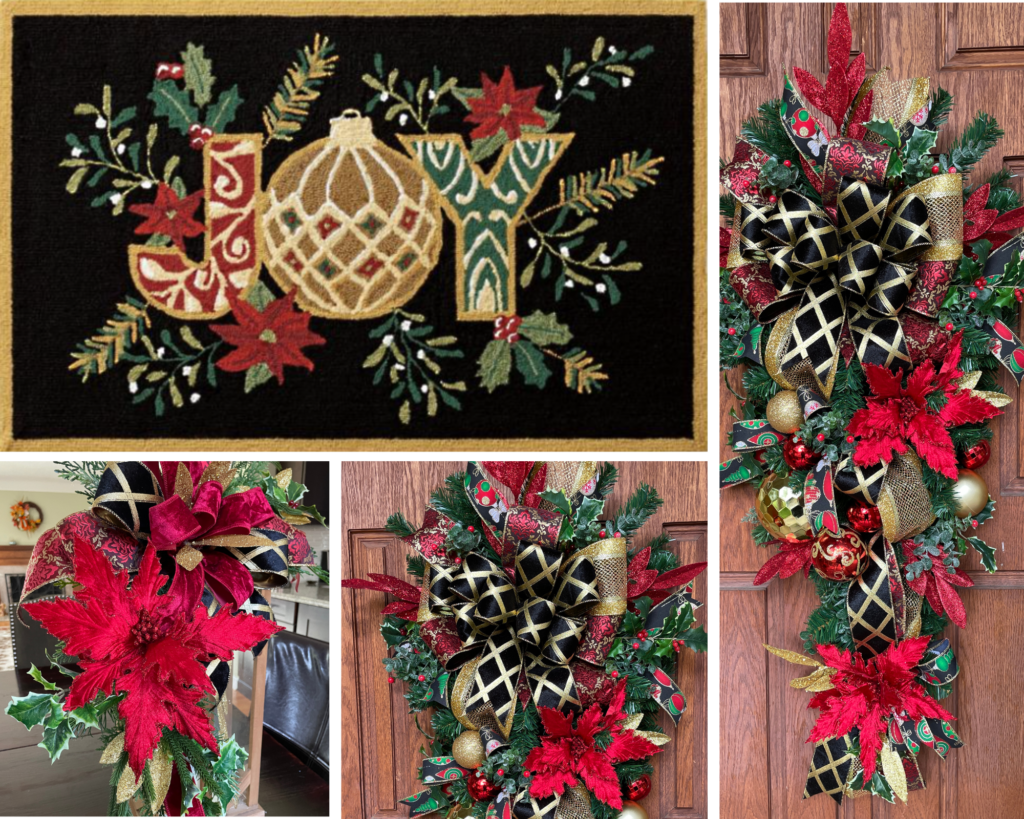
She called one day and said, “I know this may sound totally weird, but I just bought a doormat from Frontgate that I absolutely love. Can you create my holiday porch around it?”
I smiled and said yes.
The doormat featured rich reds, golds, greenery, and a traditional Christmas motif. Rather than copy it literally, I used it as a point of departure — pulling its colors, its visual language, its personality — and created a custom porch swag and coordinating lantern topper that felt like a natural extension of what she loved. The result wasn’t a giant version of the doormat. It was a cohesive holiday design that clearly belonged with it.
That’s what customization looks like in practice. Sometimes the inspiration is a doormat. Sometimes it’s a favorite painting, a family heirloom, a mountain view, or a piece of furniture that anchors the whole room. A designer’s job is to find those clues and build outward from them.
Designing around what matters most
Sentimental pieces deserve the same attention. When a homeowner has a collection, an heirloom, or a piece that simply wouldn’t feel like Christmas without it, those things don’t get worked around. They become the starting point.
What good collaboration looks like
The most rewarding projects I’ve worked on were collaborative — where we talked about the desired feeling, identified the opportunities and challenges in the space, and then I went away and thought about it for a bit before coming back with ideas.
My English boss used to use that phrase — “think on it for a bit.” What she’s really saying is ‘live with it in your mind.” Consider it from different angles or perspectives. Contemplate different scenarios before landing on a final decision. It’s part of the creative design process that I truly love. Good design rarely happens in the first fifteen minutes. It happens after photographs are reviewed, possibilities are considered, and the right idea has had time to surface.
If you’re in a consultation and a designer immediately starts telling you what you should do before asking a single question about how you live — that’s worth noticing.
→ Christmas Decorator vs. Holiday Designer: What’s the Difference?
A final thought
Can a holiday decorator match your home’s style? Yes — absolutely.
But a good holiday designer does something more than match it. They start not with a predetermined look, but with genuine curiosity about what makes your home uniquely yours.
Every home is as unique as the people who live there. Every custom holiday design should reflect that.
If you’re ready to explore what that could feel like in your home, I’d love to hear about it.
© 2026 Durango Holiday Home LLC. All rights reserved.